Cancer
Tiny Beautiful Things: Advice on Love and Life from Dear SugarCancer is presented not as a single, predictable fate but as an illness whose possibility can reorganize a life before anyone knows what will happen. In letters about a baby’s brain tumor and a young woman’s family history, fear moves between present crisis, remembered loss, and imagined futures. Sugar’s replies acknowledge the force of that fear while resisting the idea that either good or bad fortune can establish what the future holds.
Cancer as immediate crisis
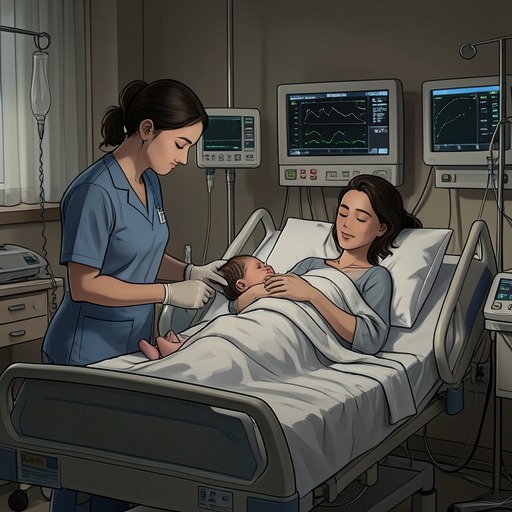
A mother writes from a couch-bed in the Pediatric Intensive Care Unit at Egleston Children's Hospital in Atlanta, where she and her husband have just learned that their six-month-old daughter, Emma, has a tumor. Brain surgery is scheduled for the following day. The mother fears several possible outcomes: that Emma may die, be paralyzed, have her development affected, or need chemotherapy if the tumor proves cancerous. At this point, the diagnosis is unresolved; the possibility of cancer is one part of a wider fear about whether her infant will survive and what life might be like afterward.
The crisis also unsettles the mother’s religious belief. Although she has never been especially religious, she finds herself asking why God would allow a potentially life-threatening operation to happen to her child. She asks Sugar and the column’s readers to pray, even as she doubts whether God exists. Her wish is both practical and spiritual: for Emma to be safe, for the family to get through the ordeal together, and eventually to look back with relief. She had written to Sugar about other concerns before, but now regards them as small beside the possibility of losing her daughter.
A later letter brings news of the operation and changes the immediate stakes without ending the uncertainty. The doctors think the tumor is benign. They leave a very small portion because it is attached to a blood vessel and removing it could permanently paralyze Emma. Emma recovers so well that even the doctors appear surprised, and the family expects to go home the next day. The mother hopes the outcome means God exists and that prayer helped protect her daughter, but she does not claim certainty: the result might also be coincidence. She continues to pray for Emma’s recovery and for the tumor not to return, extending her concern to other children at Egleston and elsewhere.
Family history and anticipated illness
In a separate letter, a twenty-nine-year-old woman describes a life with a partner she adores, plans to move in together, a stable job she dislikes, and family, friends, interests, and love. Yet she is desperately afraid that she will develop cancer. Her fear draws on several distinct family experiences: her mother had breast cancer while the writer was in college and survived, though the writer says the illness affected her profoundly; her father died of liver cancer when she was in high school; and her grandmother had a brain tumor when the writer was a newborn and died before the writer’s first birthday.
The writer believes that careful attention to her health may not be enough to quiet the suspicion that her genes are setting her up for failure. She does not ask Sugar to predict whether she will become ill or when. Instead, she asks how to make major decisions under that uncertainty: whether to marry, how to tell her partner what he might face if she receives a diagnosis, and how to consider a future in which she has already decided not to have children. For her, the possibility of cancer reaches beyond her own health to the obligations she imagines she would impose on the people she loves. The future becomes difficult to plan because she is trying to prepare herself and others for an illness that has not occurred.
Sugar’s distinction between risk and certainty
Sugar answers that the writer should share her family’s experiences, fears, and grief with her partner, but need not describe to him what he might endure as though her own diagnosis were already expected. She distinguishes actual illnesses in the family from the writer’s as-yet nonexistent illness. Family history warrants awareness and health monitoring, she says, but is only one predictor of a person’s likelihood of developing a disease. The reply does not dismiss risk; it challenges the leap from risk to certainty.
Sugar frames that leap as the work of the writer’s “crazy lady,” the inner voice that turns fear into a settled forecast. She says that when this voice governs decisions, it can make life smaller and sadder. Her response redirects attention from rehearsing a particular death to recognizing that everyone is mortal and that people generally do not know which among many possible causes will affect them, or when. The uncertainty is not evidence that this writer will develop cancer, just as imagining other possible deaths would not require her partner to prepare for each one as though it were imminent.
Loss, luck, and the limits of explanation
Sugar’s own account of cancer is shaped by the impending death of her mother, who was forty-five and dying of the disease. Sugar recalls feeling angry and deprived of mercy, even though she did not believe in God; she had expected that the protection she had generally experienced would continue. Her memory places cancer alongside the sudden harms that do not yield to a satisfying spiritual explanation. She also points to an eighteen-year-old killed by a drunk driver, a friend whose baby is expected to die of a genetic disorder, and a former student whose mother was murdered by her father before he killed himself. These examples do not equate their circumstances with cancer; they broaden the argument about suffering that cannot be explained as a reliable system of reward or protection.
The letters therefore hold two kinds of uncertainty in view. Emma’s family must wait through a real operation and then live with the possibility that a remaining portion of the tumor could return; the twenty-nine-year-old writer faces a feared diagnosis that has not been made. Sugar’s guidance responds differently to each situation: she offers the family the support of other people’s prayers and words, while telling the other writer to monitor her health without surrendering present choices to a predicted illness. Across both, cancer is neither proof of divine absence nor a forecast that family history must come true. It is a source of profound fear and loss, but not a certainty that can settle in advance what a person’s life, relationships, or future will be.